From Individual Guidance to Systemic Change
The Gap We See
Across education systems globally, especially in underserved communities, students are making
life-shaping academic and career decisions with little structured guidance.
Career and college counseling is often:
● Absent
● Inconsistent
● or treated as an Optional Service
This gap disproportionately affects first-generation learners and girls, limiting access to
informed decision-making and future opportunities.
What Changes When Counseling Becomes a System
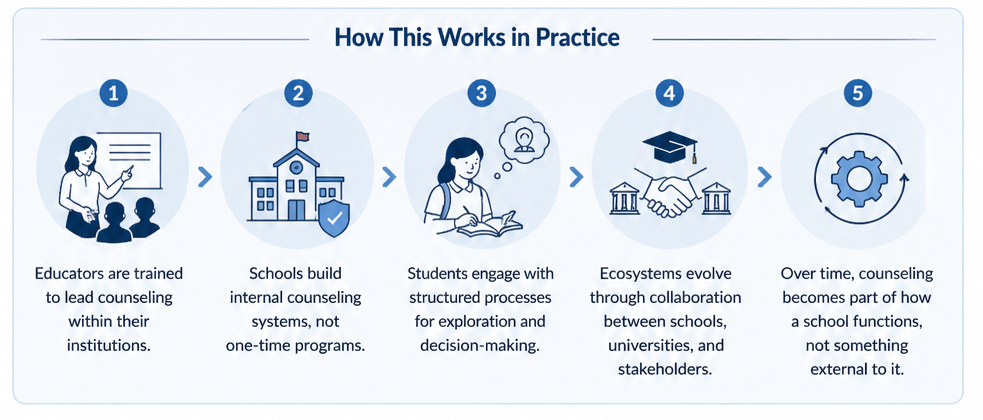
IC3 Institute focuses on embedding career and college counseling as a core function within schools, not an add-on.
Through structured approaches like the Counseling Laboratory®, schools move from: informal, occasional guidance → to consistent, student-centered counseling systems
This shift enables:
- Schools take ownership of counseling through dedicated roles and practices
- Counseling is embedded into the school experience, not delivered as a one-time intervention
- Students receive structured guidance at every stage, not just at key decision points
Tanzania Institute of Education (TIE)
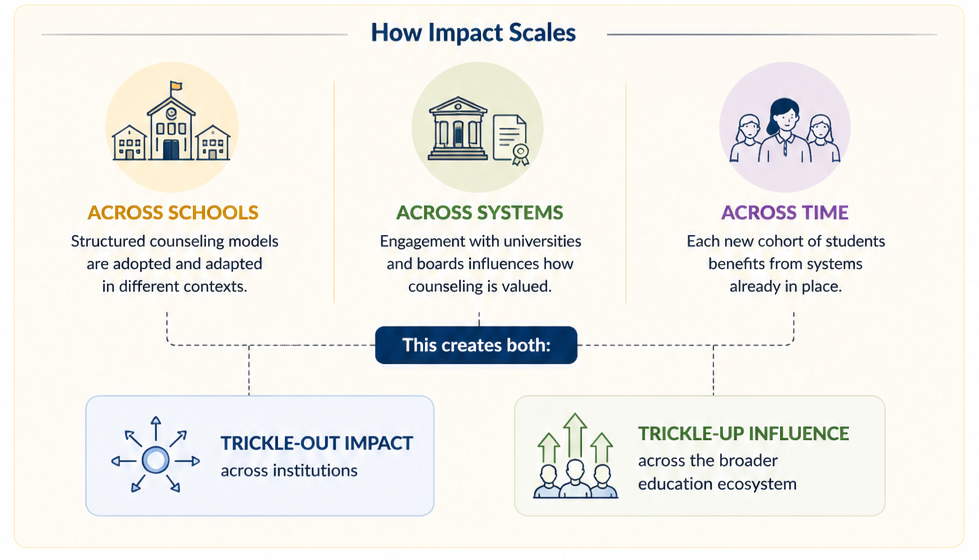
In August 2025, the IC3 Institute trained 30 curriculum developers from the Tanzania Institute of Education (TIE) through its Embark program, equipping them to create localized career guidance lesson plans for national curriculum integration. Delivered in collaboration with Aga Khan Education Services (AKES), this initiative reflects the IC3 Institute’s growing role beyond schools to influencing curriculum systems and national education practice. Designed for contexts where formal counselors are often absent, the program builds educator capacity to embed structured guidance within classrooms and school environments.
The Ministry of Education, Maldives
From April 2024 to April 2025, IC3 Institute partnered with the Government of the Maldives and the Ministry of Education to deliver the Empower Career & College Counseling Program, training 28 educators across 28 schools. This initiative has established a national cohort of trained counselors, strengthening in-school guidance systems while laying the foundation for broader systemic change. Educators reported significant gains in skills, confidence, and student engagement, and are now working to implement structured counseling frameworks such as the Counseling Laboratory® within their schools. This collaboration reflects a shift from individual training to sustainable, system-level transformation in career guidance across the Maldives.
The Central Board of Secondary Education (CBSE)
The IC3 Institute’s engagement with school systems and stakeholders in India reflects a strong systems-change approach to advancing career and college counseling. Through long-standing collaboration with CBSE, which has encouraged participation across its network of 30,000+ schools, the IC3 Institute has focused on building institutional capacity by training educators and embedding structured counseling systems within schools. Its large-scale initiatives, including a national workshop series reaching over 215,000 participants, have reinforced counseling as a shared responsibility across the education ecosystem. The recent CBSE mandate on appointing counselors and wellness teachers further signals a policy-level shift, aligning with the IC3 Institute’s mission to position counseling as essential educational infrastructure and scale sustainable, future-ready school systems.
From Access to Agency: A Systems Approach for Girls
Girls often face greater social restrictions, safety concerns, and limited access to relatable mentors, which narrow their exposure to career pathways.
With inconsistent counseling support, they are less likely to explore options freely or seek guidance confidently, leading to restricted choices and lower confidence at key decision points
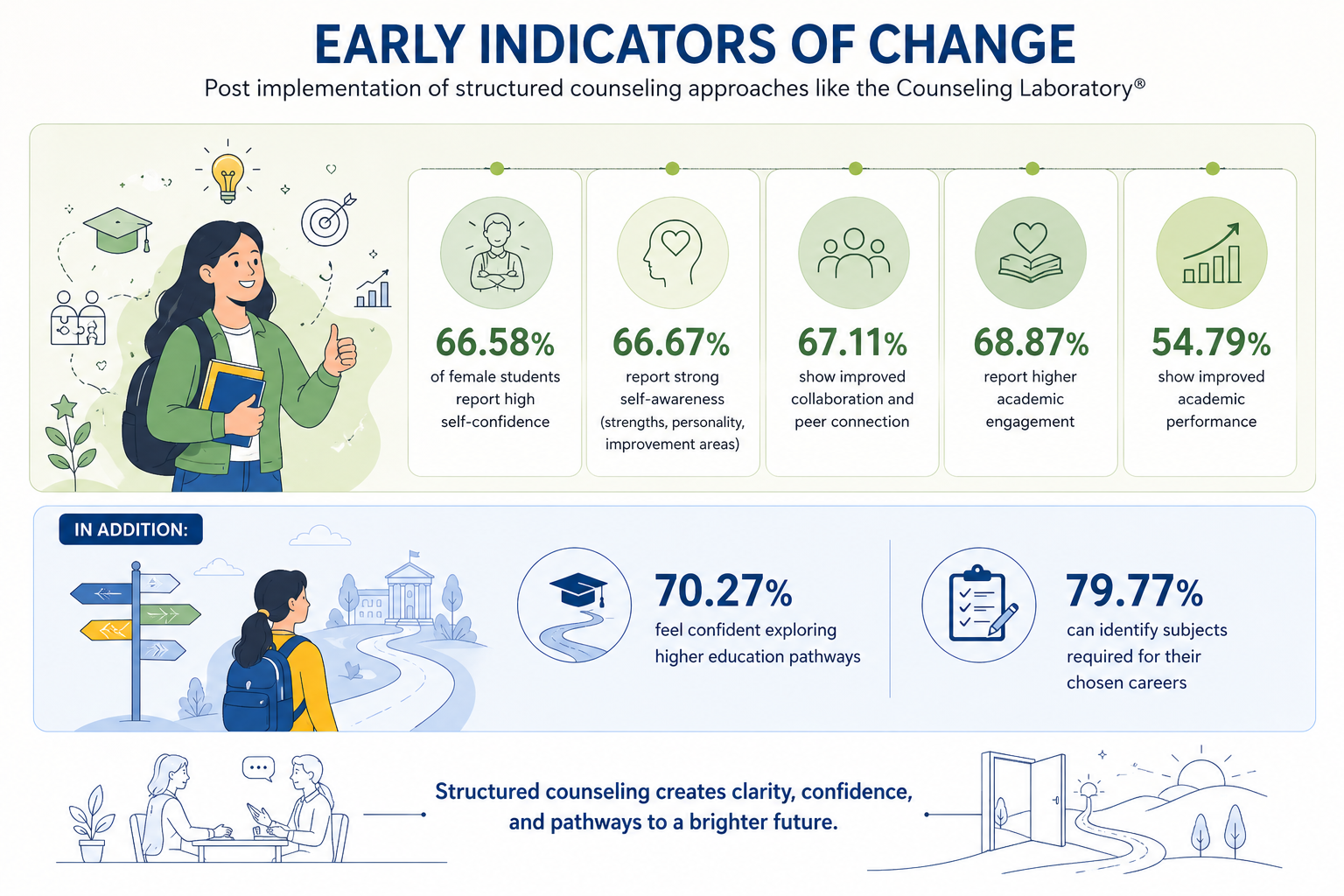
Data from the IC3 Institute – Student Suicides Aversion: Mental Health & Well-being, Volume 3 highlights following key gaps

These are not isolated challenges. They reflect systemic gaps in how guidance is delivered.
What Changes with Structured Counseling
When counseling is embedded within schools, girls are able to :
- Access trained, trusted counselors within their school environment
- Explore diverse academic and career pathways beyond perceived limitations
- Make informed subject and career choices with structured support
- Build confidence to navigate decisions and pursue opportunities
Sustained Impact Over Time
Because counseling becomes part of the school system, this impact is not limited to one group
of students.
Each new cohort of girls benefits from:
● consistent access to guidance
● structured exposure to opportunities
● stronger decision-making support
Over time, this creates a shift from limited access → informed agency.

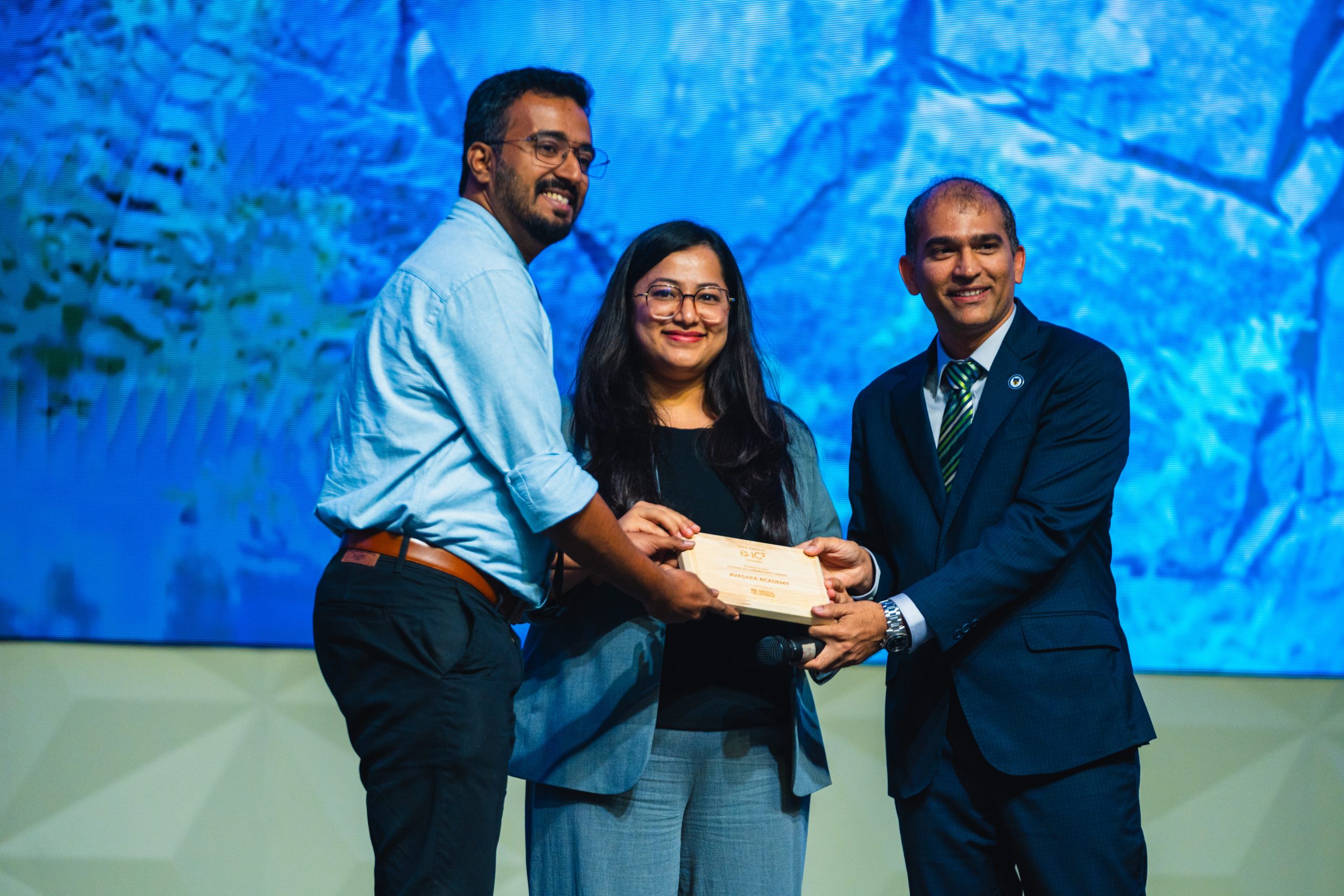
Avasara Academy | Pune, India
At Avasara Academy, IC3 Institute trained counselors support young women from underserved backgrounds in exploring careers and navigating family expectations. This collaboration strengthens structured counseling practices, helping students turn aspirations into informed decisions within and beyond the classroom.
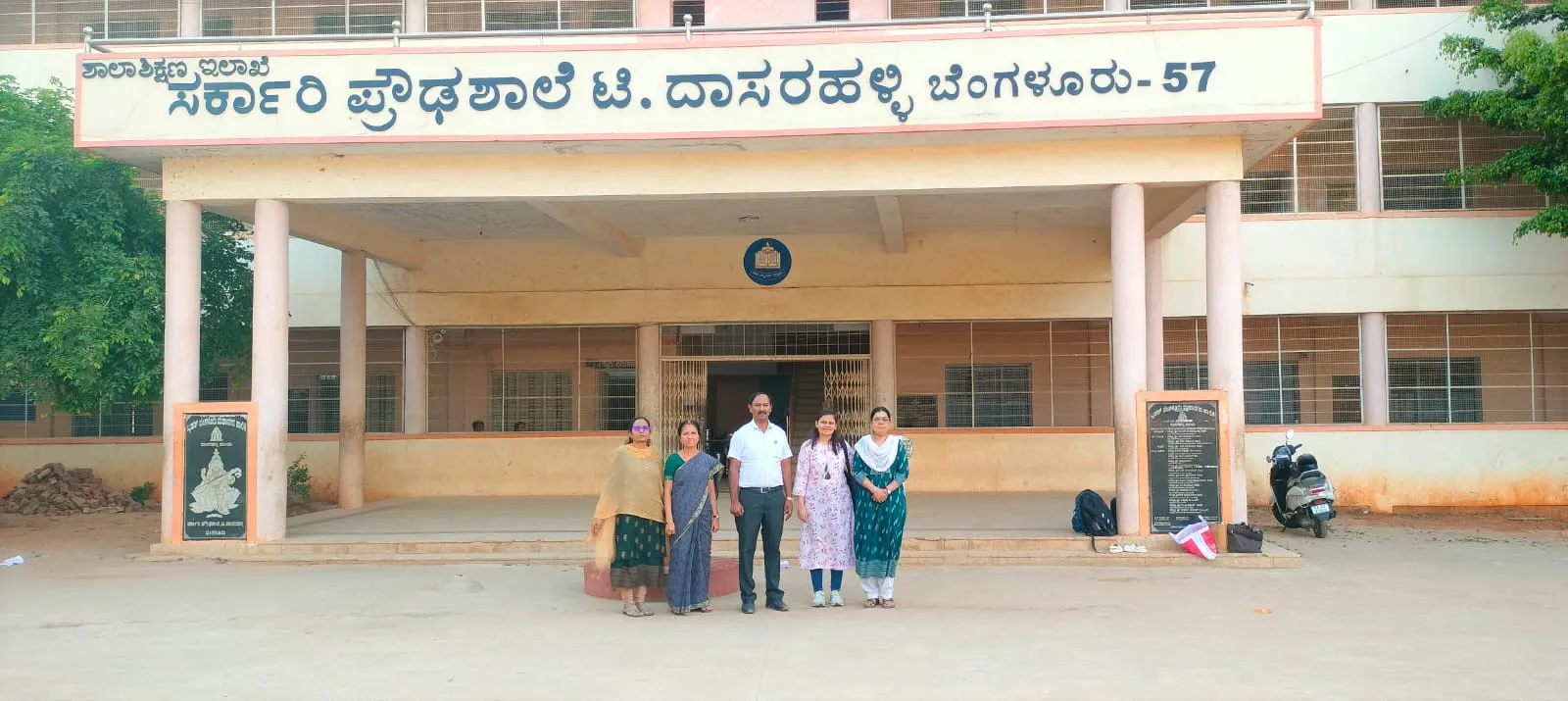
Government High School, Dasarahalli | Bengaluru, India
In this first-generation learning community, education was routine, not aspiration. After the school’s principal participated in the IC3 Institute’s program, he brought those learning back to the classroom. Through consistent guidance and care, students started asking questions about their future. For the first time, they saw education as a path worth completing, not just enduring.

Nasreen Mirza | Empower Cohort 1 | Aurangabad, India
When Nasreen Mirza completed the Empower program, the shift was not just in perspective, but
in practice.
Back in her school in Aurangabad, she began introducing structured career guidance initiatives, moving beyond occasional advice to building systems that students could rely on.
This included career exploration workshops, mentoring programs, and support for college and scholarship applications. Over time, these efforts grew into something more integrated.
Inspired by her learning, she established a Career Counseling Library and Laboratory, creating a dedicated space where students could access resources, explore options, and seek guidance.
What began as a set of initiatives evolved into a more consistent and accessible support system for students.
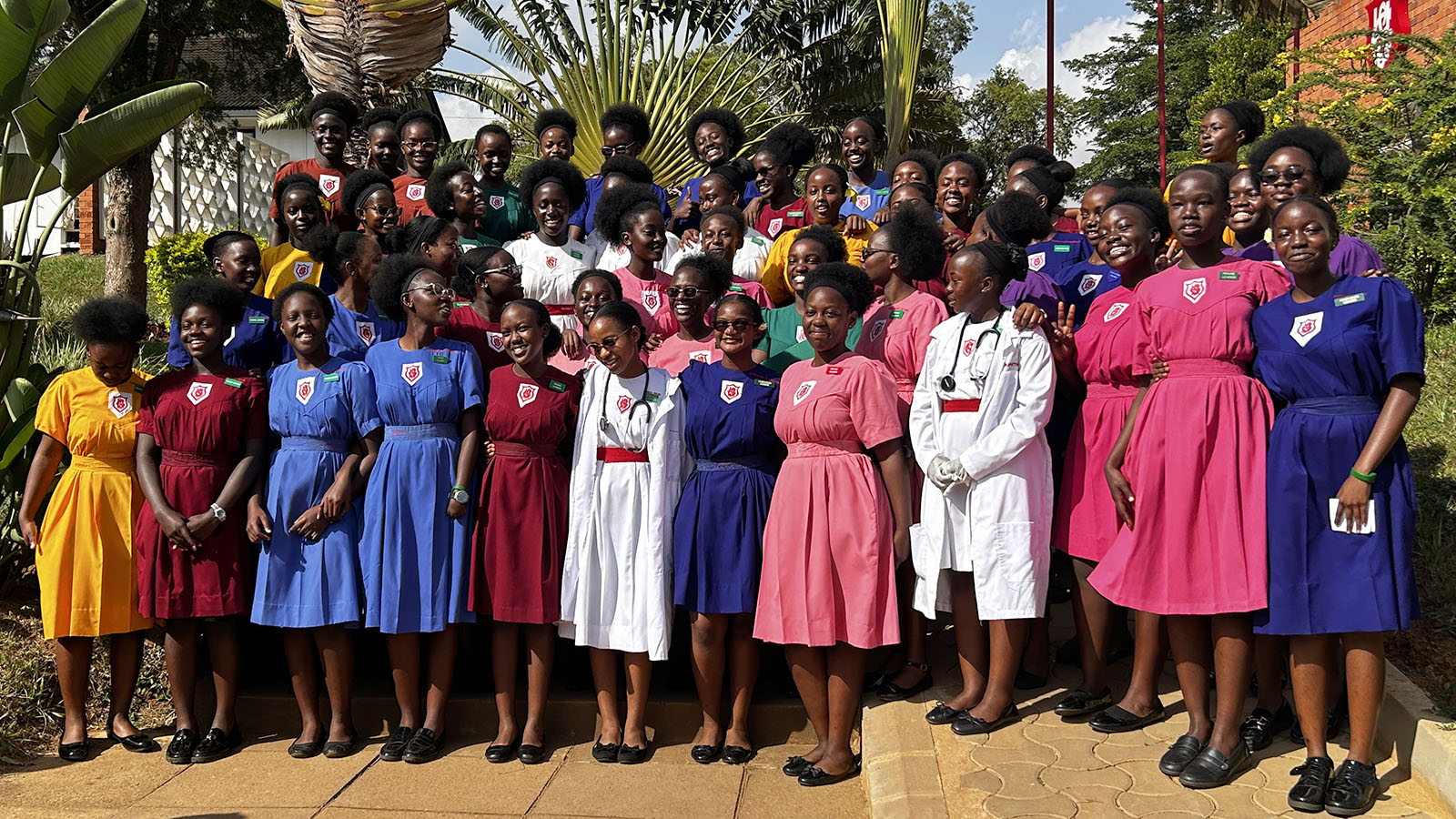
Arinaitwe Juliet | Empower Cohort 4 | Kampala, Uganda
After completing the Empower program, Arinaitwe Juliet began approaching career guidance with greater clarity and structure.
Working with students in Kampala, she focused on understanding individual needs, interests, and personalities, both among students and their families. This shift allowed her to move from general advice to more personalized and meaningful guidance.
Alongside her work with students, she also contributed to regional forums and supported the training of other educators, extending the reach of structured career counseling beyond her own classroom.
Over time, these efforts strengthened not only her own practice, but also the way guidance is approached within her wider community.

Reenu Sharma | Empower Cohort 5 | Ballia, India
At Gyan Peethika School in Ballia, many students grew up believing their futures were limited to the circumstances around them.
Working with first-generation learners from economically weaker backgrounds, Reenu Sharma began introducing structured career guidance that connected education with local livelihood opportunities. Instead of directing students away from their realities, she helped them explore ways to build sustainable futures within them.
Through counseling sessions, skill-building, and exposure to local industries, students began to engage more actively, asking questions, exploring options, and connecting classroom learning to real-world applications.
Over time, what started as hesitation and uncertainty shifted into participation, curiosity, and confidence.
As Reenu reflects on this change, she describes a moment that stayed with her, when students who once remained silent began to respond, collaborate, and take initiative.
In her words, “the children came alive.”
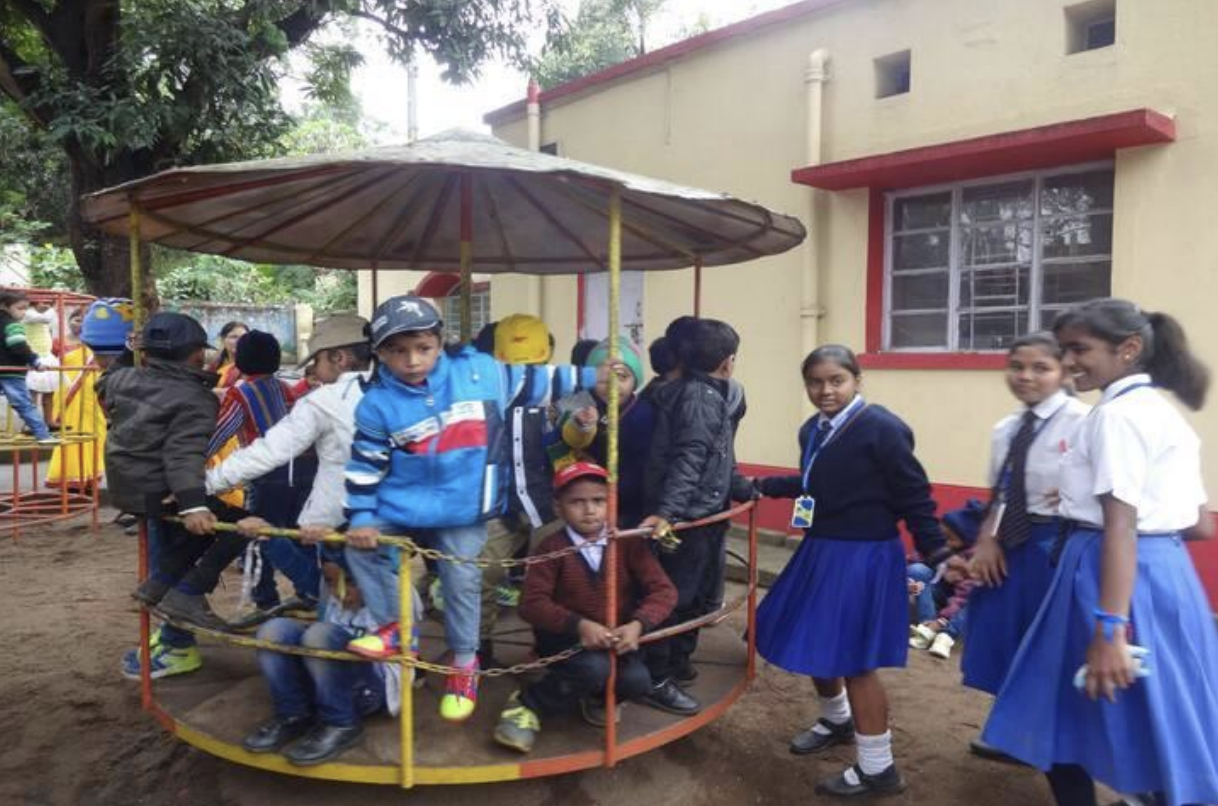
Ganesh Aranya | Empower 6 | Jharkhand, India
At Pitts Modern School in Jharkhand, career aspirations were often limited to a narrow set of options, shaped by awareness, access, and expectations. Ganesh Kumar Aranya began working with students and parents to expand this perspective, introducing conversations around diverse career pathways and connecting them to real-world opportunities.
Through internships, industry exposure, and student-led initiatives like career podcasts and magazines, students started exploring possibilities beyond traditional choices. These efforts also created spaces for dialogue within families, gradually shifting perceptions and building trust.
As students gained exposure and confidence, many began mentoring their peers, creating a ripple effect within the school community.
Over time, what started as awareness-building evolved into action, with students pursuing new pathways, building skills, and, in some cases, creating opportunities for themselves and others.
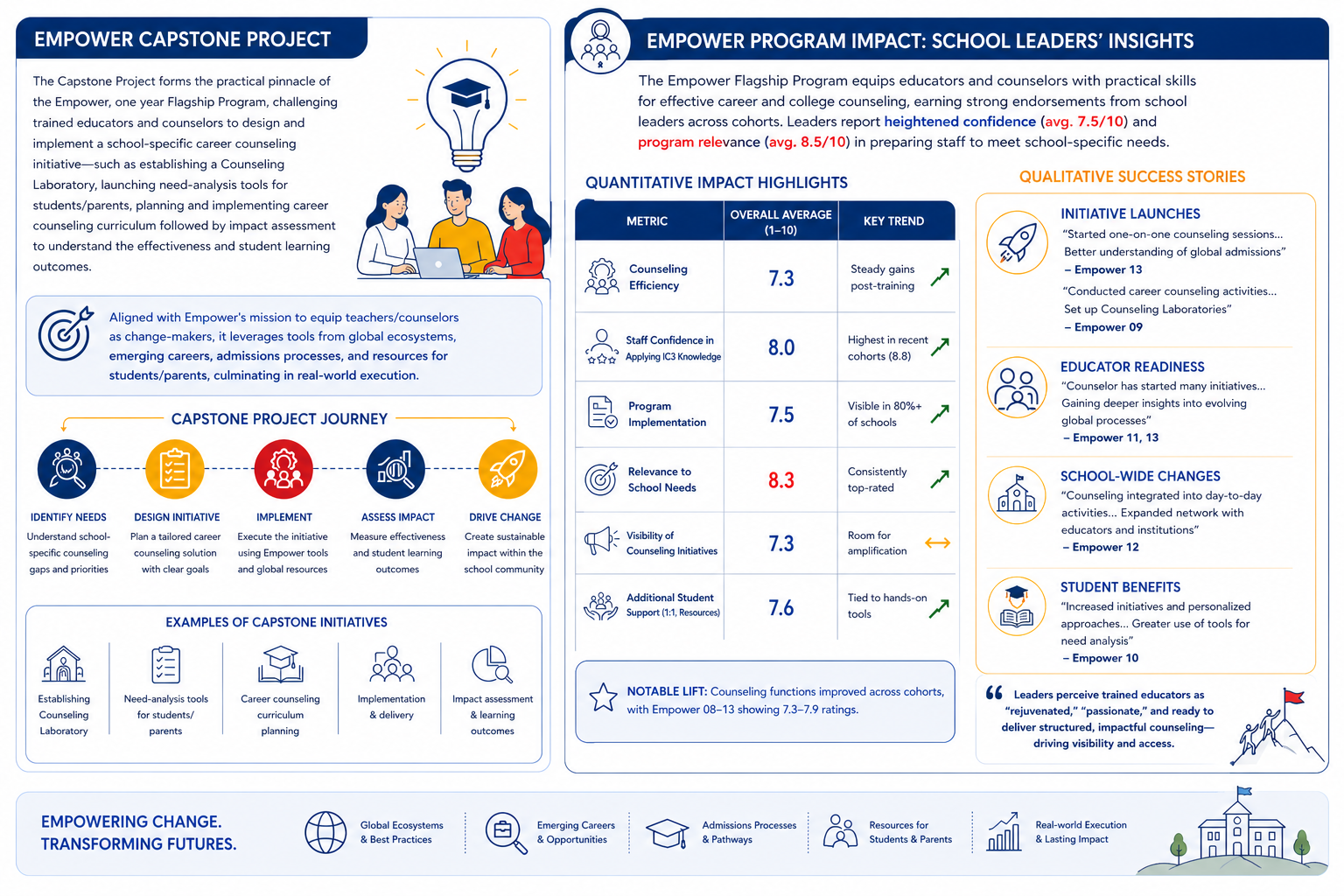
Empower Capstone Project: Turning Educator Training into Real-World School Impact